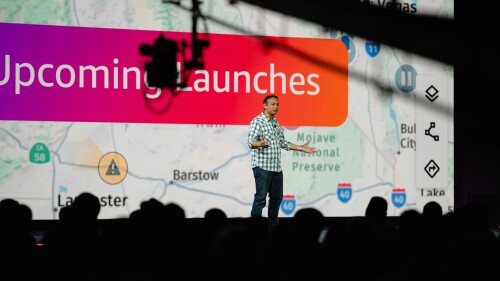
Deb LaBree is an independent owner-operator. Her views are her own and don’t represent Amazon.
At RelayCon 2026, owner-operator Deb LaBree shared how she makes trucking business decisions, handles setbacks, and checks in on her business each week. She’s been in trucking for more than 20 years and has driven over 2 million accident-free miles. She and her husband, Del, have run their own trucking business since 2014. She’s also the founder of A Woman Trucker, a coaching and educational platform for women drivers and trucking teams.
But Deb didn’t offer a formula. She started by saying, “I am not here to tell you there is one right way to run a truck.” She focused instead on how to make your next business decision on purpose.
Here’s her main advice from the talk.
- What’s the most important skill for a new owner-operator? Deb LaBree says it’s learning the business around the freight: earning, saving, paying yourself, planning for maintenance, and making decisions under pressure.
- Is dedicated freight right for every owner-operator? Not always, according to Deb. It worked for her business during one season. She says the best choice is the one that fits your own goals, commitments, and risk tolerance.
- How often should owner-operators review their business? Deb suggests once a week: pick one day, track three numbers, and ask whether you’re moving toward the business you want.
What’s it like to become an owner-operator?
In 2014, Deb and Del had a choice to make. They could sign on with another carrier, or they could buy a truck. Del was ready. Deb wanted answers first. After weeks of research, she told him, “I think we can buy a truck.”
The first weeks were a blur of setup tasks: picking a business name, buying a truck, getting inspections. “We were spending money faster than I thought was possible,” she said.
On their first load, about 50 miles out, the check engine light came on. The fix was a $3 part. But she said, “the fear was not about the part. The fear was, what if we lose everything we worked so hard to build?”
That moment taught her a lesson she still uses: “There’s no blueprint for running a trucking business, whether you own one truck or 100.”
“The road teaches you how to drive. Ownership teaches you how to think.”
How do you know how your trucking business is really doing?
Deb pointed out that most owner-operators already know how to move freight. “The hard part is learning and understanding the business that’s operating around the freight.”
When every day is about the next pickup, repair, or bill, weeks can go by without a real check-in. She suggests asking yourself four questions:
- What’s working well right now?
- What’s creating stress?
- What’s costing you momentum?
- What warning light have you been ignoring?
“Warning lights don’t always show up on the dashboard. They can be financial, operational, or personal. The goal is to recognize problems early so that we have options to take care of them.”
How do you define success as an owner-operator?
Deb warned against building a business around whatever looks good this week, like the highest-paying load or a post on social media.
“For some owner-operators, success may mean adding trucks,” she said. “For others, success may mean staying a one truck operation with stronger cash reserves, less stress, more consistency, or simply being home more often.”
Her own example: during a tough freight season, she and Del moved into dedicated freight. It wasn’t a popular move at the time. But it gave them consistent, dependable revenue and helped them meet their commitments. That stability later opened doors to more certifications and opportunities.
She was clear that this isn’t a rule for everyone. “The lesson is not that every owner-operator should pursue dedicated freight,” she said. “Don’t chase someone else’s definition of success. Build your own.”
Try this: Picture your operation 90 days from now. Think about consistency, savings, maintenance, lanes, home time, or equipment.
How should owner-operators handle setbacks like canceled loads?
“Every business will experience disruption,” Deb said. “Freight slows, loads cancel, trucks break down.” Her advice: “Don’t let one setback become a three-hour panic session.”
Before you react, ask yourself three things:
- What’s the real problem?
- What information do I need?
- What’s my first move?
She gave a common example. Say one load in a booked set cancels. It’s tempting to cancel the rest and go chase other freight. Sometimes that’s right. But sometimes the smarter choice is to spend deadhead miles and fuel to get into position for your next committed load.
“Deadhead isn’t always wasted miles. Sometimes it’s an investment in the business you’re intentionally building. It can protect your reputation, your relationships, and your peace of mind.”
What should owner-operators track each week?
Deb recommends one weekly check-in built around your own goals, “not someone else’s screenshot.” Her formula is easy to remember: one day, three numbers, one honest question.
The question: “Am I moving closer to the business I said I wanted to build?”
The numbers depend on you. She suggested:
- Actual revenue
- Fuel costs
- Deadhead miles
- Maintenance spending
- Cash reserves
- Non-financial goals, like home time or on-time performance
“The point isn’t to track everything,” she said. “The point is to pay attention to the things that matter most to the business you’re building.”
Ready for the next stretch of road?
If part of your 90-day plan is finding steady loads, Amazon Relay can help. Carriers use Amazon Relay to find and book loads that fit their lanes, equipment, and schedule, all in one place.
Check out Relay’s carrier requirements to make sure it’s the right fit for your business. Then sign up on desktop or download the app on iOS or Android to join Amazon’s freight network. Here’s a snapshot of what the load board has to offer approved carriers.
Disclaimer: Amazon does not tender loads through any third-party load boards. Any Amazon loads posted on third-party load boards will only be tendered directly to approved and onboarded carriers via the Relay web portal or Relay mobile app. If you are interested in hauling loads for Amazon, sign up and book directly on relay.amazon.com. For more about our efforts against fraud and cargo theft, see our trustworthy transportation page.